The History of the Kirby Series
Published by alistairw October 9th, 2006 in Articles
The fourth and final “History of…” for WiiEurope before they just stopped talking to me and then closed down without a word was this one on the Kirby series. It’s a good deal shorter than the other ones, but follows much the same lines.
I wouldn’t say I’m a massive Kirby fan, but that’s mostly because I’ve always found the games a little hard to find. The times I have actually played titles from the series I’ve always really enjoyed them, and re-posting this has reminded me that I always intended to pick up a copy of each of the Game Boy Advance games.
Talk to most people about their first experience with Kirby, and you’ll find that their first reaction was inevitably; “What the hell is that?” It’s a fairly reasonable question, and, unfortunately, one that doesn’t have a definitive answer.
Kirby was created by Masahiro Sakurai, a designer for Nintendo’s second party studio, HAL Laboratory. Originally named Popopo, the blob-like sprite now associated with the character was intended for use as a placeholder, until a better design could be finalised. However, at some point during the development of the first Kirby title, the 1992 Game Boy game Kirby’s Dream Land (known as Kirby of the Stars in
In 1982, Nintendo had been sued by Universal Studios over a supposed copyright infringement – Universal argued that Donkey Kong was too similar to their own King Kong character. Nintendo attorney – and future board member - Howard Lincoln was tempted to settle the case out of court, but reconsidered, and hired John Kirby to fight the case in court in early 1983. Nintendo beat the charges and received $56,689.41, as well as damages and attorney fees. Ten years later, in tribute, Sakurai named his creation Kirby.
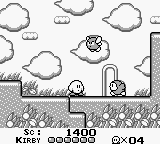
Kirby’s Dream Land was released in
The game set up a number of elements used right throughout the Kirby series – he could swallow and spit out enemies, however, he lacked his trademark ability to steal their powers by swallowing them. Though the game was short, at only 5 levels, it did feature an Extra Mode that was unlocked once the game was finished which upped the difficulty and added new enemies.
The title was also notable for its impressive graphics, which were arguably amongst the best seen on the Game Boy. Jun Ishikawa’s music for the game was also praised – most eloquently by SMW musician Xoc who noted, that “someone once said that hearing Steely Dan for the first time was like hearing ‘the Beatles with jazz chords’, and I equate that with the Kirby music”.
“I guess Super Mario Bros would be the Beatles in this context. Kirby music is a little more sophisticated.”
The game proved immensely popular, selling 5.1 million copies, paving the way for not only a sequel, but an entire franchise.
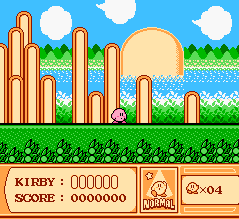
The next title in the series was released quickly after, on March 23, 1993 for
The story follows Kirby’s attempt to reunite the Dream Rod, which gives the inhabitants of
The game marked the first time Kirby could inhale and copy the attacks of certain enemies – the Sparky enemy, for example, would give Kirby the “Spark” ability, while swallowing a Waddle Doo would give him the “Beam” ability. If Kirby eats another enemy whilst already powered up, he is able to combine the two powers, with some interesting results. It also marked the first appearance of Meta Knight, a later nemesis of some note, as the boss of the
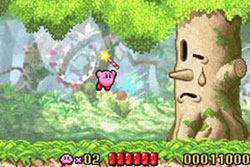
Kirby’s Adventure was later remade for the Game Boy Advance as Kirby: Nightmare in Dream Land in late 2002. This added updated graphics, music and sound, as well as a mode allowing gamers to play through the title as Meta Knight. To date, Nightmare in Dream Land has sold 2.1 million copies.
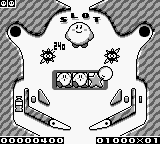
In late November, 1993, Kirby’s Pinball Land was released for the Game Boy – on the 27th in
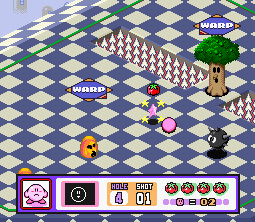
Kirby’s first SNES title was released in
The player must use Kirby to hit and defeat enemies around a short course, with the last enemy becoming the hole. Along the way, Kirby can defeat certain enemies to gain powers, and use these to finish the hole in fewer shots.
The game was praised for its innovative style, but was released in small numbers, so proved hard for consumers to find and failed to sell over a million copies.
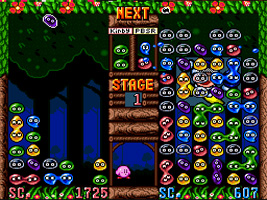
The same fate befell the next SNES Kirby title too – Kirby’s Avalanche was released on the 1st and 2nd of February in
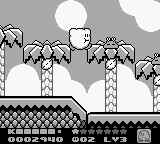
In 1995, the more successful Game Boy series finally spawned a direct sequel to
The story once again involved Kirby fighting King Dedede, though this time the King had been possessed by a force known as Dark Matter, who is trying to turn
The game sold well – just over a million copies – and was set to be re-released for the Game Boy Color as Kirby’s Dream Land 2 DX, but, like Metroid II: Return of Samus DX, was cancelled for unknown reasons.
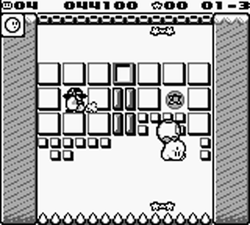
On November 26th of that year, Nintendo released Kirby’s Block Ball in the
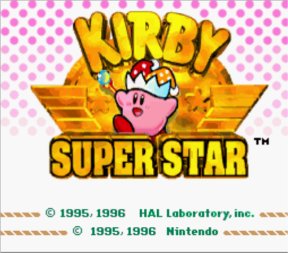
March 21st of 1996 saw the third SNES Kirby title released in
The beginner’s title, Spring Breeze, is a condensed version of Kirby’s Dream Land with an updated gameplay model allowing Kirby to copy enemies abilities, and new graphics and sounds. Both Dyna-Blade and Revenge of Meta Knight are standard Kirby platform games leading up to climactic boss battles.
Gourmet Race is a simple side scrolling platform race against King Dedede, in which Kirby must not only get to the finish line first, but also consume more food than Dedede along the way. The Great Cave Offensive is one of the more original games in the collection, and sees Kirby fighting through levels in order to collect almost a hundred different treasures. Milky Way Wishes is considered the final “major” game in the collection, and uses a slightly different gameplay model for Kirby to use enemies powers – instead of simply swallowing enemies to gain their powers, Kirby must find pedestals that, once collected, allow him to use that ability any time he wishes.
Finally, completing Milky Way Wishes unlocks The Arena, which is an endurance battle against 18 of the game’s bosses.
The game was exceedingly well received and sold almost 1.5 million copies, despite being released so late in the Super Nintendo’s lifetime.
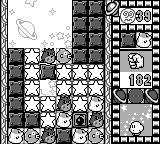
Kirby’s Star Stacker was released for the Game Boy on the 25th of January 1997 in the
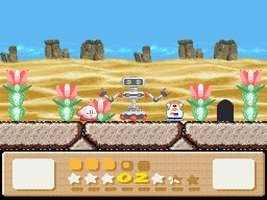
The final Kirby game for the SNES, and also the final game published by Nintendo for the system, Kirby’s
The storyline and gameplay mechanics of the title are very similar to those in its predecessor, with Kirby once again teaming up with a number of allies to defeat the Dark Matter-possessed King Dedede – though the game does add three more allies, namely Chuchu the octopus, Nago the cat and Pitch the bird.
The game received uniformly positive reviews, but, due to its late release date and low production number is extremely difficult to find.
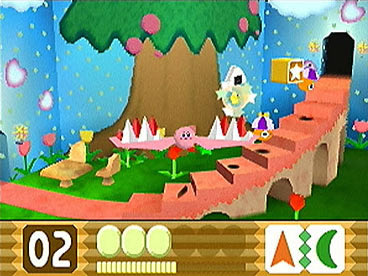
Kirby’s first, and only, Nintendo 64 outing was Kirby 64: The
Crystal Shards featured seven worlds, which Kirby battled through in another fight against Dark Matter trying to gather the titular crystal pieces in order to restore peace to the world of Ripple Star. Despite the game’s younger target audience when compared to other titles in the series, it still went on to sell over 1.7 million copies.
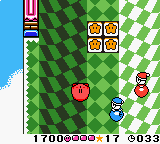
Later in 2000, on the 23rd of August, Kirby Tilt ‘n’ Tumble was released for the Game Boy Color. It later made its way to the
Though the title was praised for its innovative control system, it sold only 1.2 million copies – well below what Nintendo had expected. As such, the planned sequel to the game was cancelled, and Tilt ‘n’ Tumble was the only Kirby title released on the Game Boy Color.
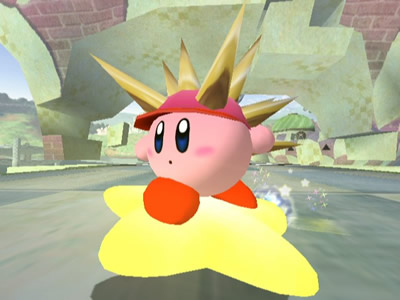
A number of years passed before the next title in the franchise – Kirby Air Ride had originally been planned as a Nintendo 64 title, and was actually thought cancelled before it turned up on GameCube release lists. It hit Japanese shelves on the 11th of July, 2003 and US shelves on the 23rd of October before finally seeing a European release on the 22nd of February 2004.
Air Ride is a basic 3rd person viewed racer for the most part, though a second mode, Top Racer, allows players to view the action from above. Reviews for the game were extremely mixed however, with some sources praising the game for its simplistic and easy to pick up gameplay, with others criticising it for over-simplifying matters. Nonetheless, Air Ride still made the GameCube best seller list, with almost 1.4 million units shifted to date.
The Game Boy Advance saw its second Kirby title (after the re-release of Kirby’s Adventure in 2002) in Kirby & the Amazing Mirror, released in Japan on April 15th, 2004, in Europe on July 2nd, in the US on the 18th of October and, after a prolonged wait, in Australia on the 18th of December, 2005. The game is set above
The original Kirby is able to enlist the help of his three simulacra using his cell phone while travelling around a static world similar to that found in the Metroid games. Interestingly, despite rave reviews praising its innovation, the game failed to sell as well as the previous GBA title, though it did manage a very respectable 1.5 million units sold.
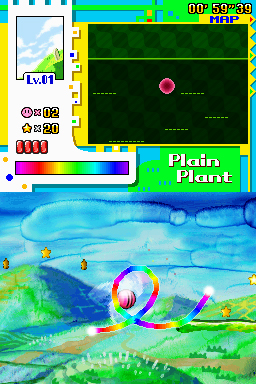
The latest Kirby game released was Kirby: Canvas Curse for the DS on the 24th of March, 2005 in
The game made heavy use of the touch screen, with players drawing rainbow paths for Kirby to reach his goal and defeat enemies with. Canvas Curse received almost uniformly rave reviews, but these failed to translate to sales.
That doesn’t mean the Kirby franchise is dead though – the DS is set to see another Kirby title, Kirby: Squeak Squad on the 2nd of November in
The gameplay of the title is set to differ from that seen in the previous DS game, playing as far more of a traditional Kirby platforming title as Kirby attempts to find treasures hidden over
Another Kirby title – which is yet to be named – was announced for the GameCube at E3 2005. Looking similar in gameplay to Crystal Shards, the title was set a December 2006 Japanese release date, but this seems to have been pushed back by Nintendo of Japan, who currently list the game as “undecided”. Whether or not it has been moved to a Wii release is currently unknown, though this is assumed to be a likely case.
Kirby’s adventures may not have always lived up to the promise of his first few titles in sales, or, arguably, in quality, but the franchise has in total managed sales of almost 21 million units which quite easily makes him one of Nintendo’s heavy hitters. His gaming history has certainly seen some varied titles, and his adaptability to these different game styles, as well as his continued popularity in the Smash Bros. series suggests that we’ll see Nintendo releasing more a couple Kirby titles for the Wii. Even if they’re not all great, his past suggests they should at least be interesting.
No Comments to “The History of the Kirby Series”
Please Wait
Leave a Reply