I do really love me a bit of Pokémon. Well, the TV show at least, and even then I haven’t actually seen it since about 2001—it just became too hard to watch it that year while at university, because, really, who gets up at 7am at uni? That’s still a few good years that I had with the show from ‘98 to 2001 though, and I even managed to see the first three or four films. They’re not terribly good, as it turns out.
While I didn’t actually own a Game Boy, I did have occasional access to a Nintendo 64 during those years, and played the hell out of Pokémon Snap and Pokémon Stadium with significantly younger friends. Then, when I finally got my own 64 in 2002 (late to the party, I know) I somehow ended up with a copy of Stadium. I think I might have swapped it with said younger people for Tony Hawk 2 or something.
Anyway, the point is, I actually had a bit of fun writing this for WiiEurope, because I got to read up on crazy Pokémon trivia. And now that they’re gone, as mentioned elsewhere, I’m letting everyone else in on the fun! Because there’s nothing more fun than crazy Pokémon trivia, y’all!
It’s either love or hate with Pokémon. For many gamers, the franchise hit at time when they more than able to identify its use for selling merchandising, and they looked down on it because of that. “Gotta catch ‘em all”, the franchise’s catchphrase, sounded more obviously market driven than pretty much anything in games before it.
For others, the games and TV shows and movies and trading cards and other assorted media caught on with a fervour not seen since Teenage Mutant Ninja Turtles years before it. Undoubtedly, the target audience for Pokémon was, and remains, younger children, but that’s not to suggest that the allure of the series is in any way age dependent – the main games of the series have received uniformly positive reviews, and have sold at levels that imply a truly universal appeal. All up, the franchise has sold well over 145 million games.
The series was created by Satoshi Tajiri sometime in the early 90s – the exact year is not known. Tajiri had been working at Nintendo since 1991, and reputedly spent the years up until the release of the first two games in Japan in 1996 working on the titles. As a child in the 60s, Tajiri had been obsessed with insect collecting, to the point that he was known by his peers as “Dr. Bug”. When the lakes and parklands he grew up around were paved over for apartments and car-parks in the late 70s, Tajiri became determined that he would find a way to let other children feel the excitement that he felt with collecting, and after first seeing Game Boy link cables and imagining insects crawling along them, he came up with the idea of Pokémon. Reputedly, Tajiri is also a sufferer of Asperger Syndrome – a mild form of autism that is characterised by a “preoccupation with a subject to the exclusion of other activities”, an impairment of social skills, and an above average intelligence. Tajiri has been described by Nintendo insiders as “reclusive” and “eccentric”, but “probably the most creative person in the world”.
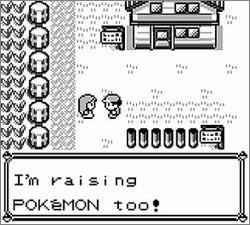
The first games in the Pokémon series were released in Japan on the 26th of February, 1996, as Pocket Monsters: Red and Pocket Monsters: Green. Confusingly, Green was renamed Pokémon: Blue for its English release alongside Pokémon: Red on the 30th of September, 1998, and on the 21st of October, 1999 in Europe. In Japan, Pocket Monsters: Blue, was released through CoroCoro Comic, a monthly manga magazine for children, in October of 1996 (and to the general public three years later) and was an update of the two previous titles that fixed various glitches, and vastly improved the graphics. The graphics of the English language Red and Blue were based on those used in Pocket Monsters: Blue, though they were otherwise straight-ford translations of Red and Green, and even contained the glitches found in those titles. Pocket Monsters: Blue did not see an English language release.
The games provoked a quick response in all regions soon after their respective releases: a result of the combination of polished turn-based RPG gameplay with Tajiri’s collection leitmotif, and, of course, the popular animated series. Interestingly though, the animated series only debuted in Japan on the 1st of April, 1997 – over a year after the release of the first set of games – though it hit US screens just under two weeks before the Red and Blue were on shelves there.
The player takes the role of a young Pokémon trainer who ventures out into the region of Kanto in an attempt to become the greatest trainer of all. To do this, he must defeat Gym Leaders in order to collect badges, and eventually challenge the Elite Four. Along the way, the aim is to collect as many different types of Pokémon as possible – in Blue and Red, there were 151. It’s not exactly complex material, and the stories of the main games that have come after these two have scarcely improved on it, if they’ve changed it at all.
The compulsion to collect was all the motivation needed to play the game, and Nintendo wisely acted upon this, placing exclusive Pokémon within both Red and Blue. These could be swapped between the two titles using the Game Boy link cables. This undoubtedly lead to increased sales for both titles, which have exceeded 31.3 million copies to date, making them (combined) not only the best selling Game Boy games of all time, but also the best selling RPGs of all time.
They were quickly followed by the release of Pocket Monsters: Pikachu in Japan on the 12th of September 1998, which saw a release as Pokémon: Special Pikachu Edition in the US on the 1st of October 1999, and in Europe on the 7th of July, 2000. The game was released in order to directly capitalise on the popularity of the animated series, and put the player in charge of a Pikachu, right from the start. As in the animated series, the Pikachu would follow the player, and displayed more personality traits than other Pokémon. It also allowed players to catch Pokémon in a similar order to that of the animated series.
Although the game was released for the Game Boy, it featured some colourising when used in a Game Boy Color. The game sold 600,000 units in its first week of release in the US, and over a million in its first fortnight, making it the fastest selling Nintendo game in history – though that record has since been surpassed, and is now held by New Super Mario Bros. In total, the Special Pikachu Edition has sold in excess of 14.6 million.
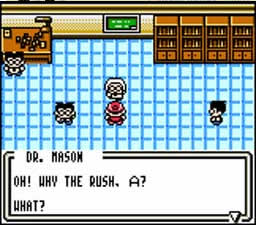
It was clear, at this point, that Pokémon was something of a phenomenon, to say the least. Along with the success of the games, and the animated series, and the graphic novels, Nintendo had also released a trading card game in Japan sometime in 1997 or 98. This took off immediately, becoming the game to play in school playgrounds for many years afterwards, so it was no surprise to see Pokémon Trading Card Game released for Game Boy Color on the 12th of December 1999 in Japan. The game was held back for Western release, since the trading card game wasn’t out in the US until 1999, and finally hit US Game Boy Colors on April 10th, 2000. The European release came later in the year, on the 8th of December.
The title essentially followed the same kind of story as the previous Pokémon games, with a hero attempting to best various enemies, including the Grand Masters, in his quest to become the world’s best – though in this case, it’s an attempt to be the best at the Pokémon Trading Card Game, rather than becoming the best Pokémon trainer. The game has sold a very respectable 3.7 million copies, and spawned a sequel, Pokémon Card GB2 which was released in Japan on the 28th of March, 2001. However, due to the impending release of the Game Boy Advance, the title was not released in the Western market.
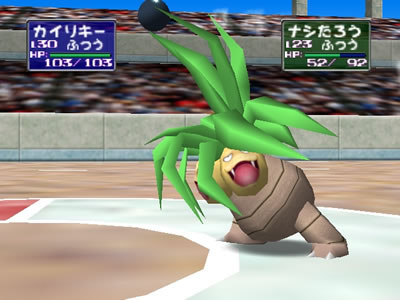
At some point in 1998, the first console spin-off, Pokémon Stadium, was released in Japan for the Nintendo 64. The title was a simple 3 dimensional representation of the battles in the Game Boy titles, and featured only 40 Pokémon, leading to suggestions that the game was rushed to release. For one reason or another, the game didn’t make it outside of Japan – though it still managed sales of 1.3 million.
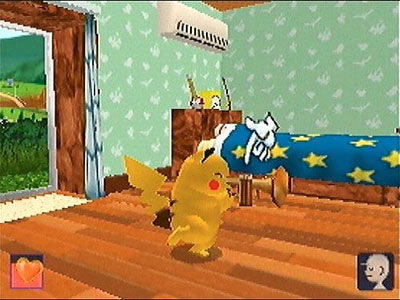
The second console spin-off, Hey You, Pikachu! was released for the Nintendo 64 on the 18th of December, 1998 in Japan, and on the 6th of November, 2000 in the US. The title was a co-production between Nintendo and Ambrella, and was the first and only title to use the Nintendo 64 Voice Recognition Unit – a microphone that plugged into the memory cartridge port of the N64’s controller. The game was aimed toward younger players than the regular series of games, and basically involved the player attempting to gain the trust of a wild Pikachu using a device that allowed people to speak to Pokémon. Following that, the Pikachu and the player can explore different areas, and go on picnics and fishing trips together.
The game wasn’t received well critically, mainly due to the restrictions of the voice recognition and the limited gameplay. However, it struck a chord with its intended audience, and ended up selling 1.8 million units, despite not being released in European territories.
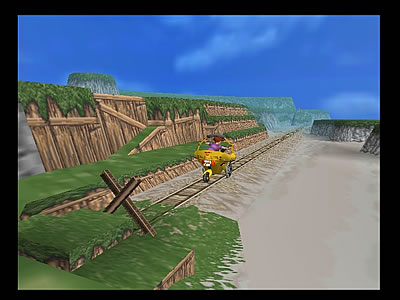
On March 27th, 1999, Pokémon Snap was released for the Nintendo 64 in Japan. In a relatively short turnaround, it was released in the US on the 27th of July, and later in Europe on the 15th of September. The game cast players as Todd Snap, a photographer who is asked to help out with Professor Oak’s research by capturing photos of Pokémon in their native habitat. Todd rides through 7 levels in an amphibious vehicle named the Zero-One, which follows a predetermined path, allowing the player to focus on taking pictures, and giving the game the feeling of an on-rails shooter.
Pictures are rated upon a number of things, like accuracy and whether or not the Pokémon in question is doing anything interesting. The game was reasonably well received, though was criticised by some for the fact that it featured only 63 of the original 151 Pokémon, and was relatively easy. Nonetheless, the title sold 3.6 million units – the same amount as Banjo-Kazooie, and more than The Legend of Zelda: Majora’s Mask.
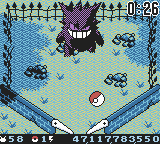
The next spin-off to hit the shelves was Pokémon Pinball, a pinball game for the Game Boy Color, which added the novelty of having to capture Pokémon whilst playing. The title was released in Japan on the 14th of April, 1999, in the US on the 28th of June, and in Europe on the 6th of October, 2000. Pokémon Pinball was one of the only Game Boy Color titles to use a rumble pak, given that the unit had to be installed in the top of the cartridge - a not inconsiderable cost for Nintendo to manufacture at that time. Fortunately, the game was hugely successful, selling over 5.3 million copies.
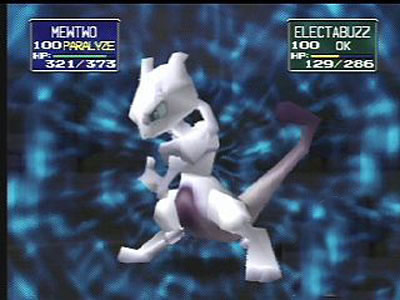
Pokémon Stadium 2 was released for the N64 in Japan on the 30th of April, 1999. Since the original title hadn’t made it outside of Japan, it was released as Pokémon Stadium in the US on the March 6, 2000, and in Europe on the 31st of December. Unlike the first title in the series, the game featured all 151 original Pokémon. The American and European versions also included support for the N64 Transfer Pak, which allowed the Game Boy games to be plugged into the N64 controller for the player’s Pokémon to be transferred to the N64 cartridge.
The game was criticised heavily for its shallow gameplay, which, aside from the rather simple battle system, featured only a few mini-games. At that point, however, players were desperate for a Pokémon game for the N64, and Pokémon Stadium represented the closest thing. As such, the game went on to sell 5.4 million copies, making it the best selling Pokémon console title to date.
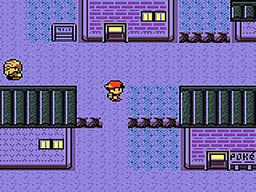
The next games in the main series, Pokémon Gold and Silver, were released for the Game Boy Color in Japan on the 21st of November, 1999. The game came out in the US on the 15th of October, 2000, one day later in Australia, and finally in Europe on the 6th of April, 2001. The games changed from the setting of the previous games, setting the action in the Johto region, and also added an additional 100 Pokémon to the mix, though the story remained essentially the same.
The titles also added different Pokéballs with which to catch Pokémon, and a day and night cycle which worked from a battery within the cartridge and allowed players to capture different Pokémon at different times of day. Unfortunately, recent reports have suggested that players batteries have begun to fail, which has also lead to players losing their save data. Gold and Silver also introduced the idea of Pokémon breeding, allowing players to hatch new Pokémon from eggs.
The games received glowing reviews from critics, and remain fan favourites to this day, with some suggesting that they are superior to latter titles in the main series. While sales did drop from the exceptional sales of Red and Blue, Gold and Silver still sold a combined 23.1 million units.
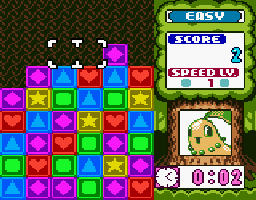
The first in the Pokémon puzzle series, Pokémon Puzzle Challenge, was released for the Game Boy Color in Japan on September 21st, 2000, in the US on December 4th, and in Europe on the 15th of June, 2001. The game was a reworking of Metroid and Game Boy creator Gunpei Yokoi’s SNES title Panel De Pon (also known in the West as Tetris Attack) but with characters from the Pokémon series. The game essentially had players attempting to stop a stack of different coloured tiles from reaching the top of the screen by matching them up.
While the game received uniformly excellent reviews, it failed to sell. Exact figures are not known, other than the fact that it sold under a million copies – the first of any Pokémon games to do so. As a result of this, it is regarded as one of the rarest Pokémon games.
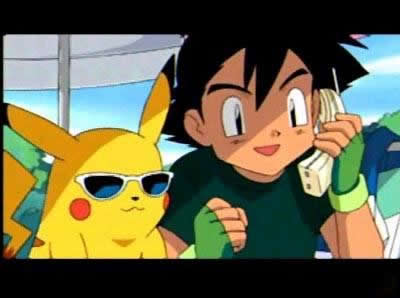
One possible reason for this might be that release of Pokémon Puzzle League for the Nintendo 64 in the US on the 25th of September, 2000 and in Europe on the 16th of March, 2001 overshadowed the handheld title. The game was effectively identical to Puzzle Challenge, but with the addition of a 3D mode, the expectedly better graphics and music of the console system, and what is regarded as the best FMV on the Nintendo 64, which tied it into the animated series more so than its handheld equivalent. Interestingly though, Puzzle League also failed to sell a million copies, suggesting that players would not just buy anything with the Pokémon name on it – despite the good reviews that the game received.
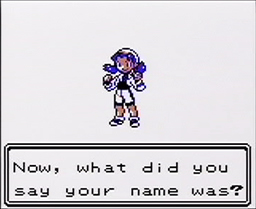
As with Red and Blue’s sister title Special Pikachu Edition, Nintendo followed up Gold and Silver with Pokémon Crystal for the Game Boy Color on the 14th of December, 2000 in Japan. It found a US release on the 29th of July, 2001 and in Europe later that year on the 1st of November. Crystal was the first Pokémon title that was only playable on the Game Boy Color, and was also the first game in the series to allow the player to choose to play as a female character.
The most interesting addition to Crystal didn’t actually make it outside of Japan – the Pokémon Mobile Phone System. Essentially a system to use a Game Boy Color connected to a mobile phone as a short distance modem, it allowed players to battle and trade Pokémon with other players across the country. It’s not known why the feature didn’t make it to Western markets, but it’s more than likely to do with restrictive communications laws, and the low use of mobile phones in Western countries compared to Japan at the time. Phone System or not, the title still sold well, clocking up 6.4 million sales.
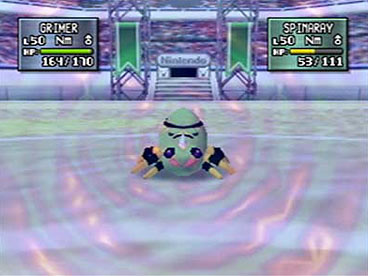
The 14th of December, 2000 also saw the release of Pokémon Stadium GS in Japan, which was released as Pokémon Stadium 2 in the US on the 26th of March, 2001, and in Europe on the 6th of October. The game was, essentially, just an update of the previous Pokémon Stadium game, but with the additional 100 Pokémon of the Gold and Silver games, and 12 new minigames. It also added the ability to play all of the previous Pokémon games on the Nintendo 64 using the Transfer Pak, making them the only Game Boy titles playable on the console without the use of an industry-only device.
As with Crystal, the Japanese version utilised the Pokémon Mobile Phone System. The game received mostly average reviews, which cited the same issues as the previous title; though it is regarded as the better title of the two, and it went on to sell 2.5 million units.

The third generation of the main series, Pokémon Ruby and Pokémon Sapphire, was released in Japan on the 21st of November, 2002, in the US on the 17th of March, 2003 and in Europe on the 25th of July. The move from the previous generation of Game Boys to the Game Boy Advance allowed the games a better colour palate, and higher resolution sprites, though, as expected, the storyline remained mostly the same.
Ruby and Sapphire introduced 133 new Pokémon to the series, though the games only carried on 67 of the previous generations’ Pokémon, which drew criticism from some fans, as did the removal of Gold, Silver and Crystal’s time cycles. The addition of two on two Pokémon battles did prove popular, though, and the games ended up selling a combine total of 14.7 million copies, which, while impressive, and enough to make them the best selling Game Boy Advance games, is less than half of what Red and Blue sold.
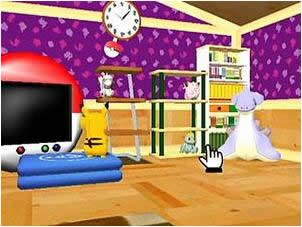
The first GameCube title, Pokémon Channel, was released on the 18th of July, 2003 in Japan, and on the 1st of December in the US. It eventually hit European shelves on the 2nd of April, 2004. The title is regarded as somewhat similar to Hey You, Pikachu! in the fact that it is not so much a game as the other Pokémon titles. Computer and Video Games famously referred to Pokémon Channel as “a well-executed…thing”.
If Hey You, Pikachu! was aimed mainly at younger players, then Pokémon Channel was aimed exclusively at them. The game casts the player as a beta tester for a new TV channel, alongside a Pikachu, since the channel is meant to appeal to both humans and Pokémon. The idea, basically, is to watch programs on the channel – the game uses the GameCube’s internal clock to add more and more programming over time. Because of the atypical nature of the title’s gameplay, and the obvious target audience, Pokémon Channel received very mixed reviews – clearly, some reviewers were able to see it as something that would appeal to younger gamers, while others only saw it as something that didn’t appeal to them personally. The game sold badly, and is yet to reach 1 million sales.
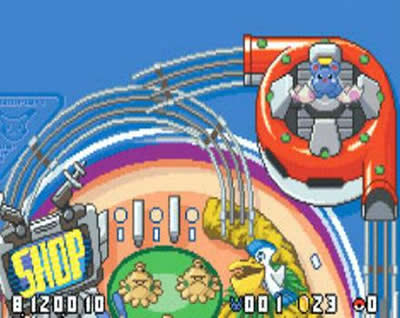
Far better received was Pokémon Pinball: Ruby and Sapphire for the Game Boy Advance, which updated the previous Game Boy Color title with the new Pokémon introduced by Ruby and Sapphire. It also introduced four play modes – Catch ‘Em Mode, the breeding themed Egg Mode, Evolution Mode and Travel Mode – and went on to sell 1.4 million copies.
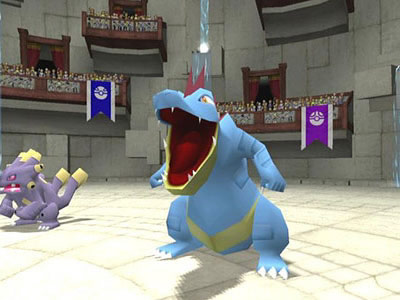
The next GameCube title, Pokémon Colosseum was a continuation, and expansion, of the Pokémon Stadium series on the Nintendo 64. The title was released in Japan on the 21st of November, 2003, in the US on the 22nd of March, 2004, and in Europe on the 14th of May. Pokémon Colosseum marked the first time all 386 Pokémon had been available in one game, and also provided the first chance for players to experience gameplay similar to that of the handheld RPGs in 3D, as well as retaining the simple battle mode of the N64 titles.
The main character of the game is Wes, a former member of the evil Team Snagem, who must now try to purify the Shadow Pokémon that the team is using to take over the world. Despite some criticism from fans for being too short, Pokémon Colosseum is the best selling of the GameCube titles, having sold 2.5 million copies.
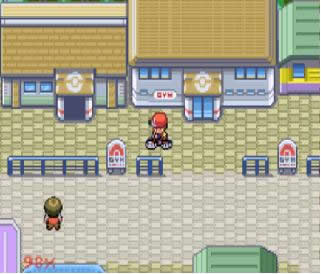
The problem of players only having 200 Pokémon in Ruby and Sapphire was fixed with the releases of FireRed and LeafGreen – Game Boy Advance updates of the original Game Boy titles. The games, released on the 29th of January, 2004 in Japan, the 9th of September in the US, and the 1st of October in Europe, finally allowed player to trade the all of the previously available Pokémon into their copies of Ruby and Sapphire, though this was only available once the player had finished the main quest. The updated titles of FireRed and LeafGreen also finally followed the Japanese naming. The two games brought the polished graphics of the other Game Boy Advance games to Kanto, and also added features from Ruby and Sapphire like the ability to breed Pokémon and two on two battles. The chance to finally see the older Pokémon on the Game Boy Advance proved irresistible, and the games sold a combined total of 9.1 million copies.
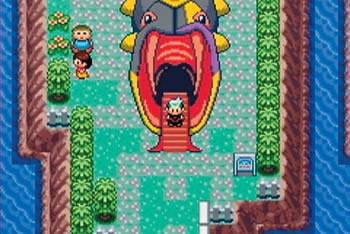
The Game Boy Advance Pokémon line-up was further bolstered late in 2004 with the release of Pokémon Emerald. Essentially an update of the series much like Special Pikachu Edition or Crystal, the game was released on the 16th of September in Japan, on the 1st of May, 2005 in the US, on the 9th of June in Australia, and on the 21st of October in Europe. It featured mostly the same storyline as Ruby and Sapphire, but added many Pokémon from the Johto and Kanto region that had been missing from that title, as well as graphical updates and bug fixes.
It also added the Battle Frontier; a new island that contained locations offering seven challenges, like three-on-one battles where the player cannot choose the exact moves used by their Pokémon, only whether it will attack or defend. This proved popular with gamers, as it added a good deal of replay value to the title. The general reception to Emerald was very positive, and the game sold in excess of 5.6 million copies.
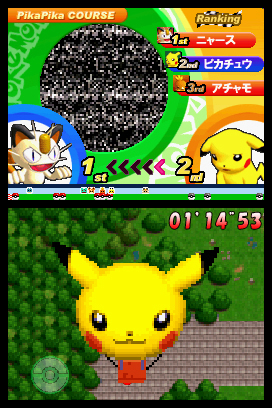
The first Pokémon title for the DS was released as a launch title for the handheld in Japan on the 2nd of December, 2004, in the US on the 11th of March, and two days later in Europe. Pokémon Dash was also the first Pokémon racing title. However, it proved unpopular with both fans and critics, who savaged the game for its poor use of license and touch screen, and ease of completion. As such, the game is yet to sell over a million copies.
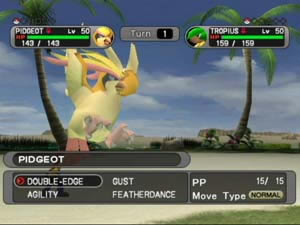
Pokémon XD: Gale of Darkness was released for the GameCube on the 4th of August, 2005, the 3rd of October in the US and on the 18th of November in Europe. The game is a sequel to Pokémon Colosseum – it also uses the same setting, and gives the player the same aim, though it changes the playable character to a Pokémon trainer named Michael. Though it did add a number of new mini games and new Shadow Pokémon, it was sharply criticised for its re-use of many of the previous game’s environments. At the current time, it has only just broken the 1 million unit mark.
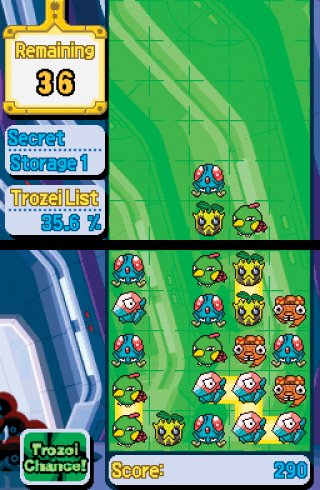
Eager to make up for the relatively dismal sales of Pokémon Dash, Nintendo released Pokémon Trozei! in Japan for the system on the 20th of October, 2005. Western releases came on the 6th of March, 2006, in the US and on the 28th of April in Europe. Trozei! was the third puzzle title to be released, and unlike the Panel De Pon-esque Puzzle League and Puzzle Challenge, the title is based more on the gameplay of Yoshi’s Cookie. At the time of its release, the game was regarded as one of the top puzzle games for the DS, though it is yet to sell more than 1 million copies.
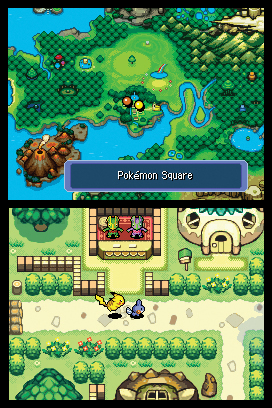
They also released Pokémon Dungeon: Blue Rescue Team for the DS in Japan on the 17th of November, 2005, as well as its Game Boy Advance counterpart, Pokémon Dungeon: Red Rescue Team on the same day. In the games, which are exactly the same, aside form the DS version making use of the touch screen and extra display space, the player is turned into a Pokémon – the type of which is generated using the answers from a number of questions at the start of the game. They must then, along with one partner Pokémon, rescue other Pokémon from randomly generated dungeons, and eventually form a formidable team in order to rescue all 386 Pokémon. The game is slated for release in America on the 18th of September, in Australia on the 28th of September, and in Europe on the 10th of November.
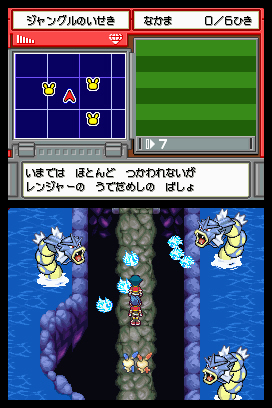
Pokémon Ranger was released in Japan for the DS on the 23rd of March, 2006. The game is more mission based than the main series of RPGs, and also casts the player as an older character. It is set for release in the US on the 30th of October, and will be released in Europe in 2007 – though it is possible that the game will make it to Australian shelves sometime later this year. It has received mostly positive reviews, though is regarded as being somewhat repetitive, and has currently sold almost 700,000 copies.
The main series will continue on the DS with Pokémon Diamond and Pokémon Pearl. The games will be released in Japan on the 28th of September and sometime in the next few months in Western territories, though an exact date is yet to be set. Diamond and Pearl are set in the Shin’ou region, and will feature a currently unknown number of new Pokémon. They will also see the return of Gold and Silver’s day cycle, and will make use of the DS’s features and Wi-Fi capabilities.
Pokémon Battle Revolution has recently been announced for the Wii, and will feature full-connectivity with Diamond and Pearl, to the point where the DS can even be used as a controller for the console. For the first time, players will see Pokémon actually make contact when attacking, and will also be able to destroy the environment around the battle. Little else is known about the game – it seems likely that it’s an RPG in the vein of Pokémon Colosseum, but nothing more has been announced yet. Pokémon Battle Revolution will be released in Japan sometime in late 2006 or early 2007, and a Western date is sure to be sometime around then too, though nothing has been officially stated.
While hardly one of Nintendo’s most innovative series, the Pokémon franchise has produced many games that transcend their perceived status as kid’s games that sell only because of their name. Though the series has dipped in popularity up to now, it will no doubt receive some boost from the upcoming DS titles. It’s unlikely that we’ll ever see Pokémon quite as popular as it once was, but the cumulative 145 million sales of the series suggests that it is well and truly established as a permanent fixture in Nintendo’s release schedule. Love it or hate it, Pokémon is here to stay.
What about pearl and diamond
How many copies were sold of it^
l
l
l